This is the inaugural post in my Faith and Fire series, which aims to explore the intersections of faith and cigar and pipe smoking in the history of the Church. My motivation for this series is threefold:
- A defense of the enjoyment of cigars and pipes against the idea that it is incompatible with Christian spirituality, exploring the historical context, personal reflections on the quiet moments of contemplation these practices can bring, and the potential for fostering community and connection among like-minded individuals who appreciate the art of fine tobacco.
- To present how the enjoyment of fine tobacco can be a positive ritual that adds depth and meaning to one’s Christian spirituality, fostering moments of reflection and connection with God.
- Enriching myself and hopefully my readers by bringing these significant historical figures to mind, reflecting on their impactful contributions and the lessons we can learn from their lives and experiences.
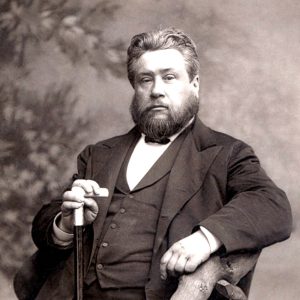
Some of the most outspoken critics of my love for cigars and pipes are Christians of the Baptist tradition. The irony of this is that one of that tradition’s most influential and celebrated pastors, loved cigars! I am talking about none other than Charles Haddon Spurgeon, who has been dubbed by historians as the “Prince of Preachers.”
Spurgeon was a prominent English Baptist minister born on June 19, 1834, in Kelvedon, Essex, England. Spurgeon was renowned for his powerful and eloquent preaching, which drew large crowds and left a lasting impact on Christian thought and practice.
By the age of 20, he was already a well-known preacher. He became the pastor of the New Park Street Chapel in London, which later moved to the Metropolitan Tabernacle to accommodate the ever-growing congregation. The Tabernacle church could seat 5000 and had standing room for 1000 more! It is estimated that throughout his life, he preached to 10 million people and delivered over 3,600 sermons!
Spurgeon’s sermons were characterized by their clarity, theological depth, and practical application. He was known for his ability to communicate complex theological concepts in a way that was accessible to the average person. His sermons were widely published and translated into multiple languages, extending his influence far beyond England.
In addition to his preaching, Spurgeon was deeply committed to social causes. In 1867, he founded the Stockwell Orphanage, later known as Spurgeon’s Children’s Charity, to care for orphaned boys and provide them with a Christian education. A girls’ wing was added in 1879. This initiative was largely funded by a generous donation from Anne Hillyard, a devout Christian widow.
Spurgeon also established the Pastors’ College in 1856, aimed at training men for ministry who had limited formal education. The college, now known as Spurgeon’s College, is still providing theological education and training today. His writings, including “The Treasury of David” (a commentary on the Psalms) and “Lectures to My Students,” continue to be influential in theological education and pastoral ministry, and are among the books in my personal library.
Spurgeon also had a well-documented enjoyment of cigars. During the 19th century, smoking cigars was a common and socially acceptable practice among many, including clergy. It was seen as a gentlemanly habit and a way to unwind after a long day.
Spurgeon personally found cigars to be a source of relaxation and a way to relieve stress. He often smoked a cigar in the evening after a day of preaching and pastoral duties. He believed that enjoying a cigar in moderation was a harmless pleasure that could be enjoyed to the glory of God. He emphasized the importance of self-control and avoiding excess and was careful to ensure that his enjoyment of cigars did not become a habit that controlled him.
Spurgeon was open about his cigar smoking and often spoke about it with a sense of humor. Perhaps his best-known statement about cigar smoking was in response to a Dr. Pentecost’s preaching about how he struggled with the spiritual impact of smoking cigars, Spurgeon made his own thoughts known saying, “I intend to smoke a good cigar to the glory of God before I go to bed tonight.” Spurgeon viewed cigars as a means of relaxation and relief, attributing his gratitude to God for these simple pleasures, claiming that “When I have found intense pain relieved, a weary brain soothed, and calm, refreshing sleep obtained by a cigar, I have felt grateful to God and have blessed His name.” He also claimed that smoking a cigar before preaching helped his voice! One another occasion, he joked with his students about smoking cigars early in the day. He once remarked, “I smoke in moderation, only one cigar at a time,” highlighting his lighthearted approach to the subject.
Spurgeon was however criticized by some members of the Christian community who believed that smoking was a bad practice for a minister. In response, Spurgeon maintained that smoking in moderation was a matter of personal liberty and not a moral issue. He often defended his practice with wit and theological reasoning. For instance, during a visit to the United States, Spurgeon was criticized by an American pastor for his cigar smoking. In response, Spurgeon invited the minister to join him for a cigar, saying, “If you can show me in the Bible where it says ‘Thou shalt not smoke,’ I will give it up.”
Spurgeon did not consider smoking cigars to be sinful, as long as it was done in moderation. He believed that Christians could enjoy the good things in life, provided they did so responsibly and without letting those things become idols. His approach to cigars was consistent with his broader theological perspective that emphasized enjoying God’s creation while maintaining self-discipline.
Spurgeon’s enjoyment of cigars adds a humanizing and relatable dimension to his legacy. It teaches that one can pursue and attain spiritual excellence while enjoying the simple pleasures in life—such as enjoying a cigar—given that it is approached with a sense of balance and moderation. For me, as a tobacconist and a person of faith, Spurgeon’s approach to cigar smoking serves as an example of how to enjoy both my passion for God and for cigars and pipes responsibly and with gratitude.
For further reading:
Spurgeon’s Love of Fine Cigars (romans45.org)
C.H. Spurgeon | Victorian preacher, Baptist church, London | Britannica
 NOT JUST BLOWING SMOKE